If you’ve ever felt like your business is running in circles despite strong sales or big growth plans, you’re not alone. The real game-changer comes from understanding not just where money is coming from but how it’s flowing through your day-to-day operations. That’s where cash flow planning strategies become super important, turning business finance from a guessing game into a roadmap that actually leads somewhere. Here’s how integrating cash flow into business planning can help shape a smarter, more predictable strategy.
Why Cash Flow Belongs in Business Strategy
Business strategy cash flow management isn’t just about tallying up numbers every month; it’s about understanding how money actually moves in and out. Good cash flow planning helps prevent those panic moments where bills stack up but payouts lag. I’ve seen businesses that look profitable on paper while struggling because they didn’t have cash available when needed. So, integrating cash flow into business decision-making means you get to react faster, plan better, and sleep a little easier at night.
Cash flow problems do more damage to businesses than most people realize. A study from U.S. Bank found 82% of small business failures traced back to poor cash flow management (source: SCORE). Having your cash flow built right into your business playbook gives you a real advantage compared to just flying blind.
What Cash Flow Planning Actually Means
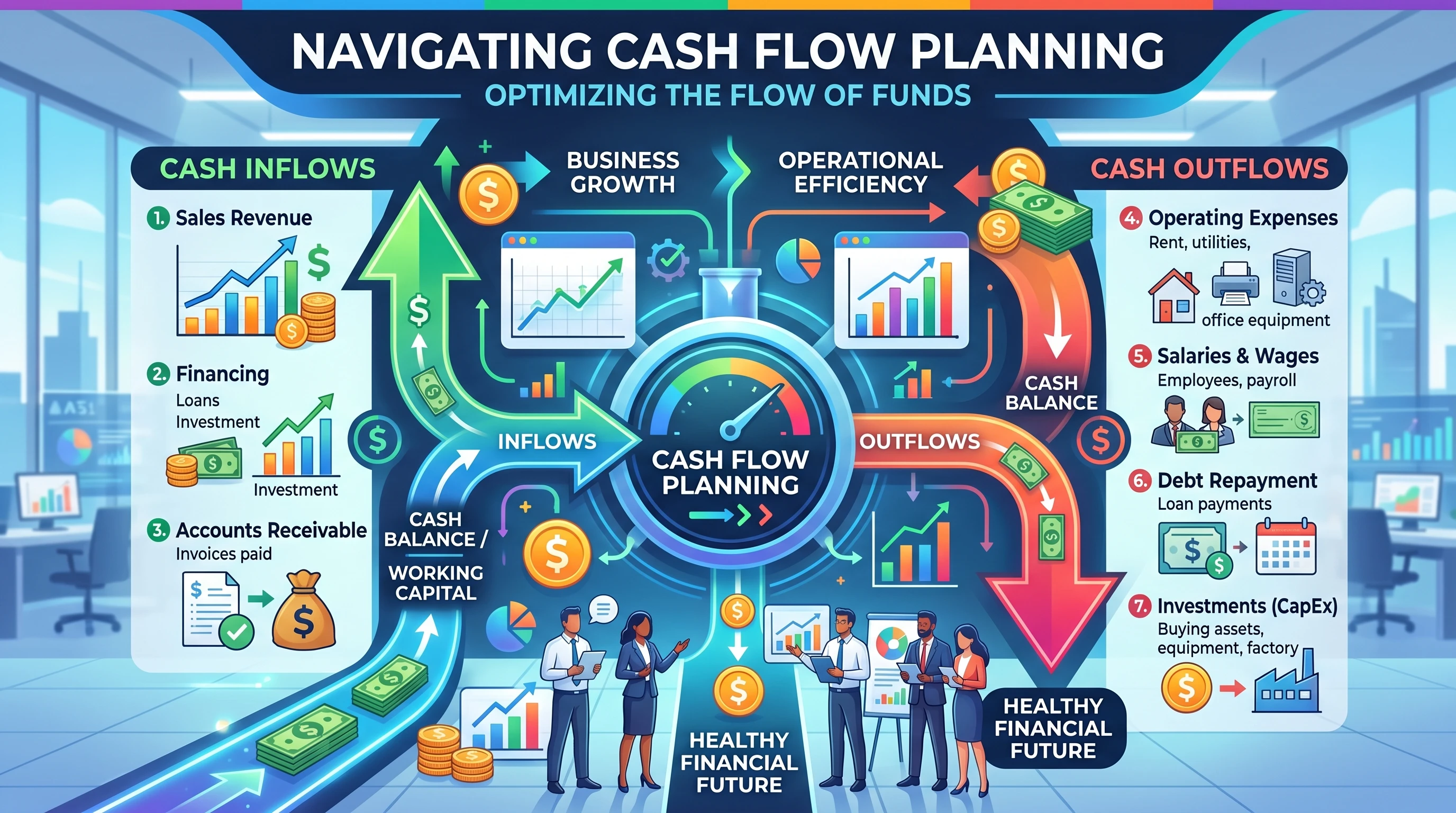
Cash flow planning strategies go way beyond just tracking deposits and withdrawals. It’s about looking ahead, mapping out expected income and expenses so there aren’t any nasty surprises. When I started really focusing on forecasting cash flow alongside my broader business plans, I started catching those shortfalls weeks or months before they became fires to put out. I Like to use a rolling 13 week cash forecast. It provides a good window and eliminates surprises.
Planning cash flow means regularly checking:
- Incoming cash (receivables): Payments you expect from customers, asset sales, and other sources.
- Outgoing cash (payables): All expenses like rent, payroll, inventory, utilities, and supplier payments.
- Timing concerns: When cash comes and goes, especially if your business is seasonal or deals with long payment terms.
Plugging all of this into a calendar gives you a hands-on view of when things might get tight and when you’ll have more breathing room. Don’t underestimate the value of visualizing these flows using simple graphs or charts—these can highlight bottlenecks and trends that are easy to miss with just numbers on a page.
How to Integrate Cash Flow Into Your Overall Business Plans
Integrating cash flow into business isn’t an extra step; it’s about making it part of your regular strategy talks. Here are some practical ways to build cash flow into planning:
- Include Cash Flow Forecasts in Your Budgeting: Don’t just budget by annual totals. Lay out monthly or even weekly projections for how cash will move based on sales cycles, payment terms, and seasonal trends.
- Get Input from Department Leads: Ask department heads for heads-ups on planned hires, upcoming purchases, or big projects. Updates like these help you spot future cash crunches early.
- Make Cash Flow KPIs Part of Success Metrics: When tracking performance, look at days cash on hand, accounts receivable aging, or debt service coverage, not just profit margins or sales numbers.
- Stress-Test for What-Ifs: I like running simple “what happens if” scenarios, like a key client paying late or the need to replace major equipment, so I’m not caught off guard if cash flows suddenly switch up.
Also, remember to keep open communication channels between finance and operational teams. This ensures new information, such as unexpected customer orders or supply chain issues, quickly updates your forecasts.
Building Blocks of a Good Cash Flow Plan
A solid strategy for business strategic cash flow management includes a few must-haves:
- Realistic Sales Projections: Look at past data and market trends to predict what’s actually likely, not just what you hope for.
- Accurate Expense Tracking: Include not just the usual bills but also hidden costs like equipment repairs or new software.
- Buffer for Surprises: I try to keep a minimum cash “cushion,” usually one or two months’ worth of expenses, so I’m not scrambling in slow periods. A cash buffer is great but it really makes sense to have a revolving line of credit in place. No charges for interest until it is used and it provides a great security blanket.
- Clear Payment Policies: Set clear terms for customers and review them often. Quick follow-ups on overdue accounts keeps cash flow steady.
- Flexible Payment Options for Vendors: Negotiating longer terms with suppliers can help even out rough patches without risking relationships.
Once you’ve built cash flow projections into your strategy, the next step is keeping that plan visible and up to date. I’ve found that tools like QuickBooks make this much easier by giving you a real-time view of your cash position, tracking receivables and payables, and helping you spot trends before they become problems. Instead of revisiting your cash flow once a quarter, it becomes something you can monitor and adjust as part of your regular decision-making.
If you want a more practical way to stay on top of your cash flow, it’s worth taking a look—especially since QuickBooks offers a free trial to see if it fits your business. Click the link to get started.
Additionally, as a double check, revisit your plan every quarter to adapt to changing economic conditions. Small tweaks, like renegotiating vendor contracts or updating billing practices, can give a boost to your cash position over time.
Common Pitfalls and How to Avoid Them
Not all cash flow strategies work perfectly the first try. Here are some issues I’ve run into, plus tips for handling each:
- Overestimating Sales: It’s easy to be hopeful, especially during planning season. I always use conservative numbers and keep a backup plan in case sales dip.
- Underestimating Expenses: Small costs add up fast. Every few months, I check actual vs. projected numbers to spot trends or areas where spending creeps up.
- Ignoring Seasonality: Some businesses boom in certain months and dip in others. Lining up larger savings ahead of slow seasons saved me more than once.
- Missing Hidden Costs: Taxes, insurance hikes, or unexpected repairs can all take a bite. Building a little extra “breathing room” into forecasts helps cushion those blows. Remember that cash flow shortfalls can happen at any time, so it pays to stay proactive.
Cash Flow Tools Worth Checking Out
You don’t have to manage cash flow with just spreadsheets. There’s a lot of tech out there designed for cash flow planning strategies:
- Cloud Accounting Software: Programs like QuickBooks, Xero, and FreshBooks offer built-in cash flow reports and easy forecasting tools.
- Dedicated Cash Flow Planners: Tools like Float or Pulse let you build what-if scenarios, track actuals versus forecasts, and set alerts for low-balance warnings.
- Integrated Payment Solutions: Linking invoicing and banking in your accounting system makes tracking really straightforward.
Testing out free trials on a couple different platforms helped me find one that fit my workflow and didn’t feel overwhelming. These tools often include collaborative features so teams can work together on budgets and projections in real time, making adjustments as new information comes in.
Adjusting Your Business Based on Cash Flow Insights
Cash flow isn’t just a background number for your accountant to fuss over. When you integrate it into daily strategy, you end up making much smarter decisions. Here are a few ways cash flow insights shape a strong overall business plan:
- Informed Hiring and Growth: Expanding your team or adding locations is less stressful when you know you can cover increased payroll and overhead.
- Smarter Spending: Investing in equipment or new marketing channels is easier when you see your expected cash position for the next few months instead of relying on gut feeling.
- Negotiating Confidence: Walking into vendor discussions with clear data on payment cycles puts you in a stronger position for getting better terms.
Strategies like these protect against running short and let you plan for slow periods or big opportunities without unnecessary risk. If you adapt your approach based on real data, you can time your investments or hiring plans to best match your cash position.
Real-World Example: Using Cash Flow to Navigate Uncertainty
A few years ago, my business hit a seasonal dip we hadn’t really planned for. We saw it coming in the forecast and adjusted by delaying a nonurgent capital purchase and asking a couple of customers for deposits upfront. That kept things afloat. Without those quick moves, we would have been in hot water. This is why integrating cash flow into business is not just a nice extra. It directly keeps the lights on and your team paid.
For another example, consider a retail company that tracks cash flow weekly. This approach allowed them to anticipate the holiday rush and stock up on inventory in advance, resulting in increased sales and avoiding stockouts. Their careful planning let them act promptly on opportunities and weather slow months much more smoothly than competitors who didn’t keep such close tabs on their finances.
Frequently Asked Questions About Business Strategy Cash Flow Management
Here are a few questions I often hear from business owners and founders looking to improve their cash flow planning strategies:
Question: What’s the most important part of cash flow planning?
Answer: Building realistic predictions and checking in on them often helps you react faster if things start to slip. Don’t just set and forget; review them monthly.
Question: How can I get customers to pay faster?
Answer: Offering early payment discounts, sending friendly reminders, and making payment as easy as possible (like online portals) usually speeds things up. Consistency keeps money flowing in.
Question: When should I update my cash flow forecasts?
Answer: Every time there’s a major change, such as onboarding a new customer, making a big purchase, hiring new staff, or when market conditions mix it up. At a minimum, a monthly review keeps surprises from catching you off-guard.
Question: What are some warning signs of future cash flow problems?
Answer: If you notice a regular delay in accounts receivable, upcoming large tax bills, or an increase in short-term borrowing, it’s a good idea to focus on your forecasts and make sure these don’t turn into bigger headaches down the line.
Quick Reference: Tips for Integrating Cash Flow Into Your Business Strategy
- Forecast Regularly: Don’t rely on annual plans. Short-term projections catch issues early. Like I stated earlier, a 13 week rolling forecast is great for planning.
- Make Cash Flow Visible: Display graphs or dashboards right where leadership can see them; this keeps cash top of mind.
- Plan for the Unexpected: Always have a backup if a big payment falls through or expenses spike.
- Celebrate Small Wins: Closing out a month with cash to spare? Take note of what helped you achieve it.
- Keep Learning: Cash flow trends change as your business grows. What worked last year might need upgrades now.
Summarizing:
Getting a handle on business strategic cash flow management means you’re building a business with staying power. The more you practice cash flow planning strategies, the better your decisions will become, the fewer surprises you’ll face, and the more confidently you can chase your big plans. Keep cash flow in your toolkit and let it guide your discussions at every level, and you’ll see stronger, steadier business growth.
Here’s a little transparency: Our website contains affiliate links. This means if you click and make a purchase, we may receive a small commission. Don’t worry, there’s no extra cost to you. It’s a simple way you can support our mission to bring you quality “Business Planning content.”
Cash flow is something I hear about a lot, but it’s often explained in a complicated way, so I like how you broke it down in a more practical and understandable way. I don’t run a business yet, but I can see how managing cash flow properly could make a huge difference in staying stable and growing over time. It seems like something that’s easy to overlook until it becomes a problem. From your experience, what’s the best way for a beginner to start tracking and planning cash flow without getting overwhelmed? Are there simple tools or methods you’d recommend?
Also, how often should cash flow be reviewed to keep things on track?
Thanks for the comment.
The best tool I have seen for measuring cash flow is a product called QuickBooks. I have successfully implemented at many clients when I had the consulting practice. It is very easy to understand even for a novice and to get it up and running. It will provide cash flow statements on demand in real time. The best frequency for reviewing cash flow is monthly. If you have any other questions please contact me.
Best, George
This is an excellent and highly practical overview of how cash flow planning should be integrated into overall business strategy rather than treated as a separate financial task. I especially appreciate your emphasis on forecasting, stress-testing scenarios, and maintaining visibility into cash movement, because these are often the factors that determine whether a growing business remains stable. The real-world examples and actionable suggestions make the topic approachable for both newer entrepreneurs and experienced business owners. Your focus on proactive planning, flexibility, and consistent review highlights the reality that strong cash flow management is not just about survival, but about creating sustainable long-term growth.