
Operations teams today feel the pressure of constant change more than ever before. Markets switch up, fresh competitors pop up, and technology trends evolve at breakneck speed. This forces operations teams to stay nimble if they want to keep things humming along. That’s where agile methodologies truly shine. They offer real life, practical ways for ops teams to react fast, all while holding onto quality and efficiency. Throughout my own experience, whether in startups or large corporations, these agile strategies always proved useful, especially when the pace is relentless and everyone’s got to stay in sync.
Agile Methodologies for Change Management
Change can be overwhelming, especially in operational environments that already feel stretched thin. Agile methods give teams a game plan to break big changes into pieces that feel doable. Instead of trying a total overhaul, agile suggests tackling smaller goals, seeing what works, and adjusting along the way. This makes any surprise less stressful and easier to handle.
Agile ideas started off in software development in the early 2000s, but the main concepts fit into operational work just as well. Key principles are things like team work, short work cycles (they’re called “iterations” or “sprints”), lots of feedback, and baking flexibility right into daily routines. Using agile for change management in operations means you break down bigger transitions into sprint sized chunks so everyone can learn and adjust quickly without feeling overwhelmed.
Big names like Spotify and ING Bank have made waves for bringing agile outside of software. Spotify, for example, leans on small, cross functional “squads” to push out regular improvements. This helps them test ideas, fix problems fast, and pivot when needed. Even when done on a smaller scale, bringing these agile concepts into operations lets teams react fast and keep downtime and confusion at bay.
Top Agile Practices for Operations
Adopting agile in operations is really about picking the practices that actually deliver results and help you adapt quickly. Here are a few routines I’ve seen truly work for day to day operations:
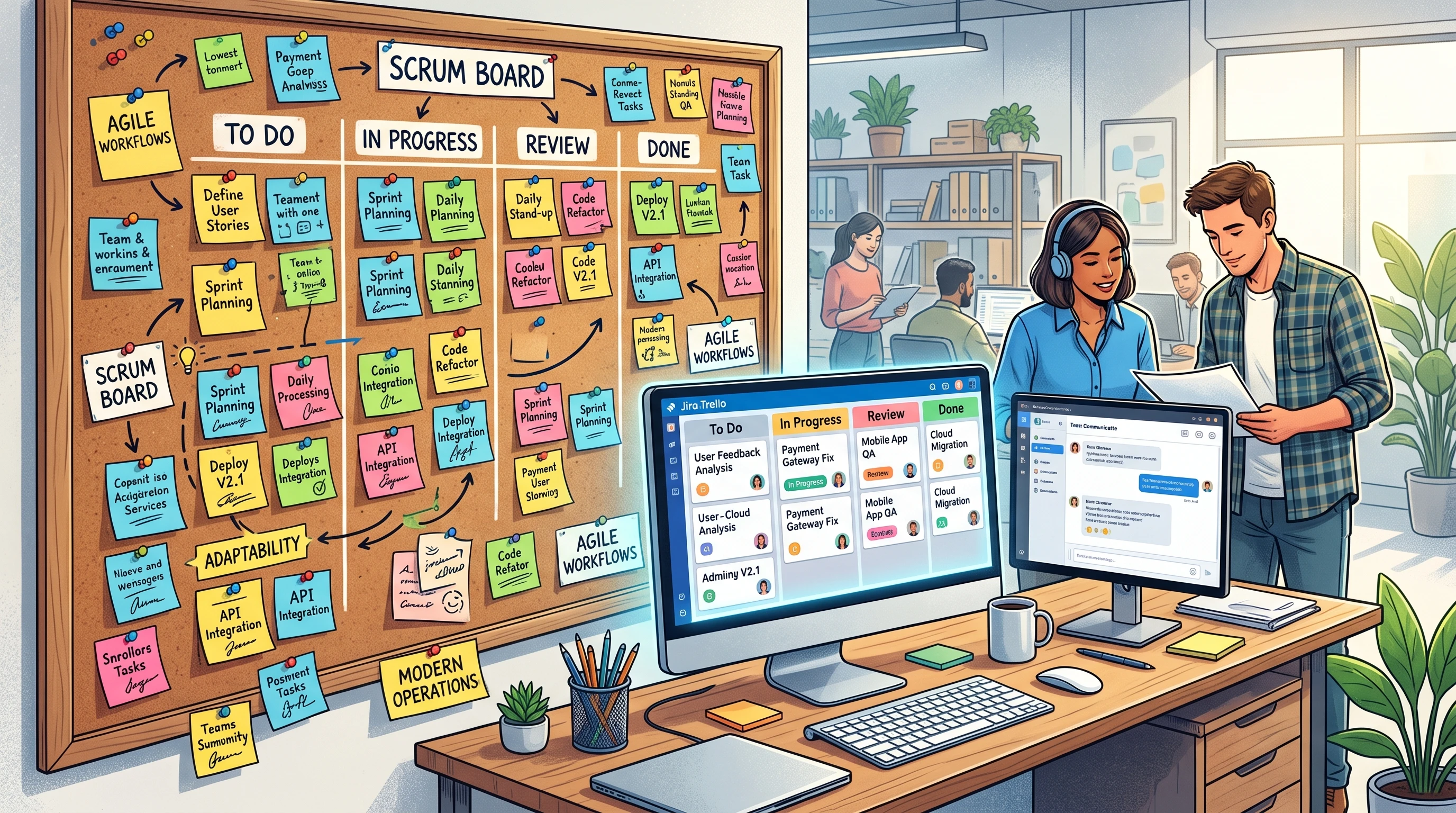
- Kanban Boards: These straight forward boards show task status in real time. It’s a visual tool that helps monitor progress, pick up on bottlenecks, and zero in on what’s most urgent. Ops teams use Kanban to keep the workflow moving and catch issues before they snowball.
- Daily Standups: These are quick, everyday check-ins that let teams share updates, see road blocks, and keep focus. These meetings can be as short as 10 minutes; it’s the routine that matters more than length.
- Retrospectives: After each sprint, it’s time to look back: what went well, what flopped, and where tweaks can make a difference. Honest, blame free feed back drives steady progress.
- Iteration Planning: Start each sprint by agreeing on what’s coming up. For operations, this could mean picking a process to fix, busting a backlog, or finding new ways to reduce recurring issues.
- Process Mapping: Regular reviews and updates to workflow diagrams make sure you’re not slowed by outdated steps. Agile teams revisit these maps sprint after sprint, cutting out steps that no longer help.
Not every routine fits every team. A single change, like just trying Kanban or standups, is a good place to start. Then, as the team gets more at ease, it’s easy to add new agile pieces. There’s no need to mirror software teams exactly. What counts most is finding what fits your day to day operational challenges.
Agile Transformation in Business Operations
Agile transformation means more than just tossing around buzzwords or using new tools. It’s about switching up how everyone, from front line staff all the way up, sees and handles change. In my work, the real signs of agility look like this:
- Empowered Teams: Ops folks get more say in their own workflow. When the people closest to the work can choose how things get done, solutions come faster and problems get solved on the ground, minus the usual waiting games for approvals.
- Better Cross Department Collaboration: Silos break down in agile setups. Ops teams work tightly with IT, finance, HR, even customer service, to track down and fix issues that cross department lines before they become delays or extra costs.
- Faster Experimentation: Agile teams try out small tests and collect feedback before anything goes big. Catching mistakes early means fewer headaches and the chance to learn without much risk.
- Transparency and Data Sharing: Agile teams put their work out in the open. Dashboards and updates let everyone see progress and pick up on trouble spots early.
The switch isn’t always smooth, especially when an organization has done things the same way for years. It’s smart to experiment with agile in one area first. I’ve seen groups turn around fast once they see agile cut confusion and spark results. Patience, plus picking a small starting point, go a long way toward lasting wins.
Best Tools for Agile Methodologies
Agile tools really help bring these routines into daily ops, whether your team works remotely or shares an office. Below are some great options I’ve used and recommend:
- Trello: This visual Kanban tool lets you track tasks, deadlines, and priorities easily. Drag and drop boards make project juggling simple for everyone.
- Jira: While it started in software, many ops teams use it to monitor sprints, outstanding tasks, and track changes. It’s robust if you need deeper tracking and reports.
- Asana: Another user friendly way to manage projects and tasks, run sprints, and keep up with priorities. Asana helps make sure important work doesn’t slip through the cracks.
- Monday.com: For many small businesses, Monday.com is a strong option for supporting agile operations. The platform allows teams to manage projects, assign responsibilities, track progress, and quickly adapt when priorities change. Its visual dashboards and customizable workflows provide visibility across projects, helping businesses stay organized while responding to changing market conditions. If you’re exploring ways to make your business more agile, Monday.com is worth considering. Its workflow and project management features can help teams stay aligned, improve communication, and adapt more effectively to change. Click the Monday.com link to learn more and to start a free trial.
- Microsoft Teams or Slack: Even though these are communication tools, they help a lot with regular updates, fast feedback, and daily check-ins, especially for teams that love standups.
Most of the tools above have free or affordable versions, so even small teams can try things out before spending big. The best results appear when teams start simple and only add more features as the workflow matures. Too many dashboards can muddle things, so it works best to focus on features that actually make daily tasks easier.
Handling Challenges in Agile Operations
Switching to agile brings its share of hurdles. From what I’ve seen and learned, here’s how teams can take on the common hiccups:
- Resistance to Change: Not everyone loves shaking up routines. Involve everyone early and invite plenty of feedback. This builds trust and gets buy-in.
- Unclear Roles and Responsibilities: Jumping into agile without clarity about who does what is a recipe for confusion. Lay out roles, write them down, and adjust them as projects move around.
- Lack of Leadership Support: Without help from the top, teams might stall. Share small wins and show off successes to help convince leaders who may be skeptical.
- Measuring Progress: Endless meetings and over complicated reports help no one. Stick to simple, meaningful metrics, cycle time, issues resolved or process improvements, that genuinely help your team learn and improve.
Roadblocks are all part of the ride. What counts most is responding fast and tweaking course, which lies at the heart of agile itself.
Advanced Tips and Tricks for Operations Teams
After nailing the basics, going a bit deeper can seriously boost results. Here are some advanced tactics I regularly share with ops teams ready to take things up a notch:
Automate Routine Tasks: Put tools like Zapier or built in workflow automations to work so your team can spend less time on manual updates and more time solving real problems. Automation pays off quickly with higher focus and fewer slip ups.
Use Realtime Dashboards: Simple dashboards with Google Data Studio or Power BI offer a single, accurate source of information. They make daily check-ins smoother and show everyone what matters in a glance.
Break Up Large Projects: Projects dragging for months or looking too big? Chop them into smaller chunks. Small wins build momentum and keep motivation up, making big jobs feel a lot less intimidating.
Keep Feedback Loops Tight: Alongside retrospectives, use anonymous surveys, 1 on 1s, or even suggestion boxes. Multiple feedback avenues make sure everyone is heard, and issues are raised before they become big headaches.
Rolling out these extra steps makes agility a team habit and helps teams stave off burnout, keep growing, and keep fresh ideas coming even as the group expands or the projects get more complex.
Frequently Asked Questions
People often ask a few common questions as they get into agile for operations:
What’s the first agile practice to try in operations?
Answer: Kanban boards are simple and flexible, providing instant visual clarity on workloads and priorities with minimal setup effort.
Can agile work for nontech, traditional operations?
Answer: Yes, it can. Breaking work into cycles, encouraging feedback, and making tasks visible help any team get out of a rut or adapt fast to shifting demands.
How do you handle team members who dislike agile?
Answer: The best thing is to listen. Ask for their input and demonstrate how small agile tweaks can ease day to day stress. A little firsthand experience usually turns skeptics into fans.
Are there ways to measure the impact of agile in operations?
Answer: Track before and after numbers on things like cycle time, bottlenecks, mistakes, or completed tasks. Simple metrics can quickly spotlight improvements and areas that still need work.
Key Takeaways for Agile Operations
Agile is not just a tech team thing. Operations teams trying to keep pace with nonstop change get a ton of value from short cycles, constant feedback, and a mindset focused on flexibility. Start with Kanban boards or daily team check-ins, and adapt from there. The right tools and a practical rollout turn change from a headache into a real advantage. Staying agile helps operations teams not just keep up, but occasionally lead the pack in a world that never stands still.
Here’s a little transparency: Our website contains affiliate links. This means if you click and make a purchase, we may receive a small commission. Don’t worry, there’s no extra cost to you. It’s a simple way you can support our mission to bring you quality “Business Planning content.”
Thank you for sharing this article. One thing I’ve discovered while building my own website is that being willing to adapt is just as important as having a good plan. Sometimes the strategy you start with isn’t the one that works best, and making small adjustments over time can lead to much better results. I was wondering, in your experience, what is the biggest challenge businesses face when trying to adopt agile methodologies? Is it changing systems, or is it helping people embrace a different way of thinking?
Thanks for the comment.
The biggest challenge is the resistance to change. That was the biggest obstacle that I faced when I was in the consulting business. Most of the issues I faced were trying to implement changes which ultimately helped the organizations I was working with were resistance.
I really enjoyed this article, but the section on empowered teams especially resonated with me. In my experience, the people doing the work every day are often the first to see inefficiencies and the first to recognize practical solutions. When they’re trusted to contribute ideas instead of simply following instructions, they become much more invested in the outcome. In my job, I was given a spreadsheet to work with on a daily basis to reconcile accounts. I was empowered to work with this in order to get the best outcome.
I also appreciated that you emphasized starting small. It’s tempting for organizations to try to transform everything at once, but lasting change usually comes from making one improvement, learning from it, and then building on that success. That approach seems much more sustainable than trying to overhaul an entire operation overnight. With my large company, I have been overwhelmed when they make too many changes all at once.
I’m curious: in your experience, what is the biggest obstacle to creating truly empowered teams? Is it usually leadership being reluctant to let go of control, or employees who have become so accustomed to being directed that they’re hesitant to take ownership when the opportunity is given?
– Scott
Thanks for the comment.
I have found that the biggest issue having a negative impact on team empowerment is the lack of buy in from top management. That can stop empowerment in it’s tracks.