
Referral programs can be a game changer for small businesses trying to build a loyal customer base without breaking the bank. As someone who’s worked with plenty of entrepreneurs, I can say the power of word of mouth is just as strong now as it was before digital marketing even existed. A solid referral program doesn’t just bring new faces in the door. It also helps you keep your regulars happy and excited to spread the word.
Why Referral Programs Work So Well for Small Businesses
Referral programs thrive on trust, and trust matters a lot in small business circles. When someone recommends their favorite local shop or service, that endorsement is a lot more convincing than a flashy ad. For people starting a small business or running one with limited resources, every referral counts as a personal introduction that fast tracks trust.
Industry data backs this up. Nielsen’s research shows that recommendations from people we know are the most trusted form of advertising. That trust usually means new customers are more willing to try your business, stick around longer, and even spend a little more when they feel that personal connection.
Referral programs also make marketing budgets stretch further. Big companies can pour money into paid ads, but a smartly designed referral program keeps your brand in customers’ conversations without extra ad spend.
Another great reason referral programs work is because they mix word of mouth with tangible rewards, turning satisfied customers into ambassadors for your business. It’s like giving your marketing a boost without doubling your work load or spending a fortune.
Understanding the Basics: How Referral Programs Work
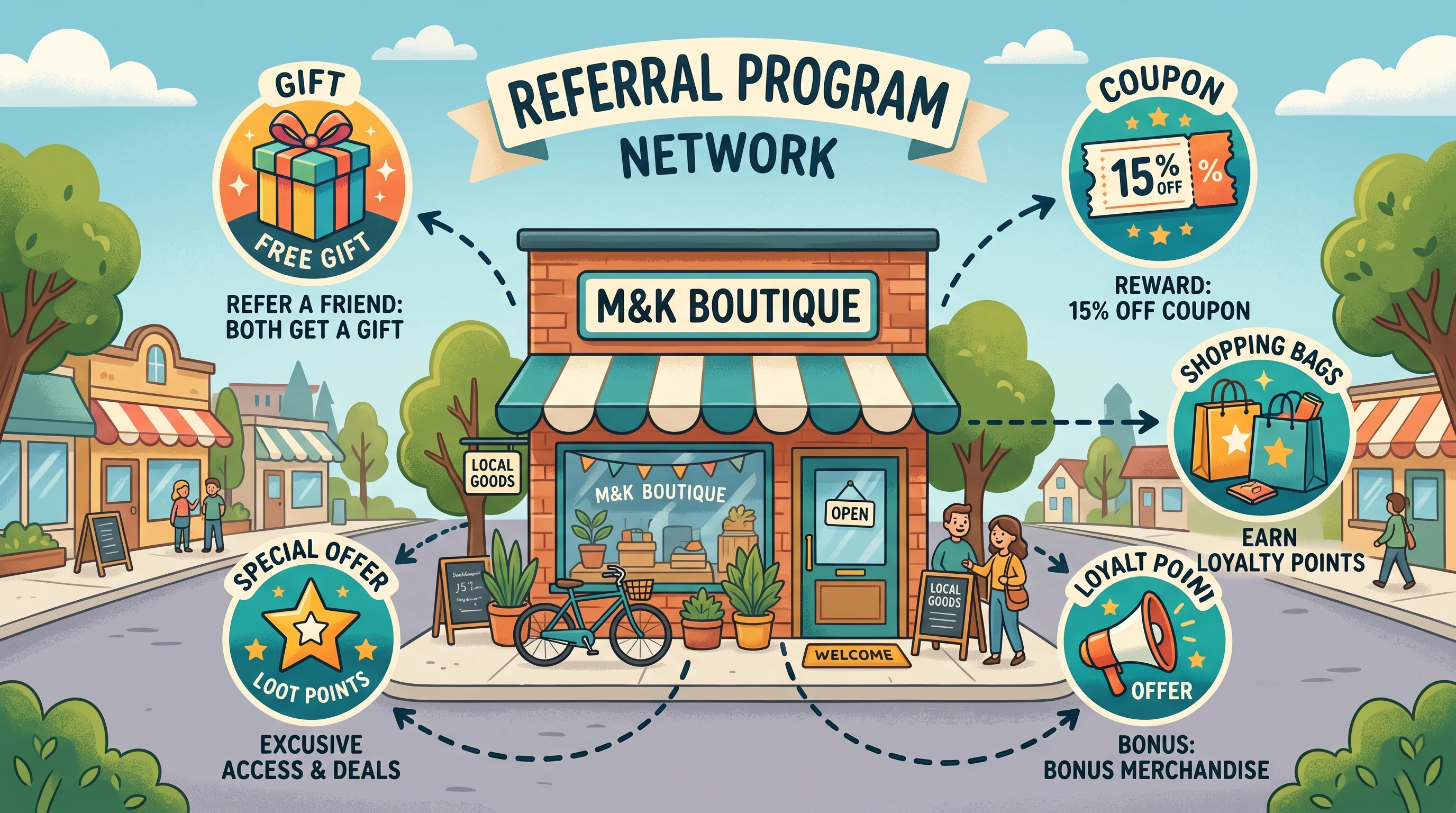
You don’t need to build a complicated system to kick start a referral program. The general idea is to offer something in return for customers sending new people your way. Sometimes it’s a discount, a small gift, or store credit. In other cases, it might be early access to new products or a free upgrade.
The backbone of any referral program is a simple process:
- Ask for referrals: Make sure your regulars know you welcome their help spreading the word. A quick flyer, a mention at checkout, or a friendly email works wonders.
- Offer a reward: Give referrers (and sometimes their friends) a thank you in the form of a special perk.
- Make it easy: Provide a unique link, a simple code, or a referral card. The fewer steps, the more likely customers will actually refer.
Referral programs have evolved a lot, too. In the early days, people mostly handed out physical cards or mentioned names at the register. Today, tech makes it even easier with online referral links, automated reward tracking, and apps designed for small businesses (like Refersion, ReferralCandy, or TapMango).
If you aren’t tech savvy, don’t worry, paper forms or simple punch cards can still get the job done. The main goal is to make the process as easy as possible for both you and your customers so there aren’t any hurdles that stop referrals from happening.
Setting Up a Small Business Referral Program
The best referral programs start with knowing your audience. What do your customers actually want? For some, a $10 discount is an exciting reward. For others, a branded mug or early access to a sale is the coolest perk they could ask for. Spend a little time chatting with customers or sending out a quick poll to get a sense of what would motivate them.
Here are some practical tips that help create a small business referral program from scratch:
- Keep the process simple: Complicated signups and too many steps discourage participation. Whether online or in person, your referral system should work smoothly in just a couple of clicks or a quick conversation.
- Make the offer clear: State exactly what’s in it for both the referrer and the new customer. A simple “Refer a friend and you both get 20% off your next purchase” works better than a muddled explanation.
- Track referrals accurately: Manual tracking might work at first, but digital tools like loyalty platforms become really handy as your program grows. This keeps things fair and prevents missed rewards.
- Spread the word wide: Share the referral opportunity on your website, in your store, through email, and on social media. Consistent reminders keep it top of mind.
- Say thanks: Even a quick personal note or a shout out on your page makes referring customers feel appreciated; sometimes that’s just as motivating as the reward itself.
It’s totally normal to start small. Even a basic punch card or paper form can help you test the waters before you upgrade to a software based system. Many small businesses begin with something simple and then grow the program as word spreads and participation increases.
Don’t forget to train your team. When everyone is on the same page, the process works more smoothly, and customers feel more comfortable asking questions or referring their friends. Also, set up clear guidelines so staff know exactly how to record referrals and deliver rewards.
Managing the Referrals You Generate
Generating referrals is only valuable if you have a reliable way to follow up with the opportunities they create. Pipedrive can help you organize referral leads, track conversations, schedule follow ups, and see where each opportunity stands in your sales process. This can be especially helpful for a small business where leads might otherwise get lost among emails, phone calls, and day to day responsibilities.
If you want a simpler way to keep referral opportunities organized and moving forward, take a closer look at Pipedrive and see how it could fit into your sales process.
Common Challenges (And How to Handle Them)
Even the best referral programs can hit a few bumps. Here are some of the problems I see most often, plus how you can tackle them:
- Low participation: Sometimes, customers just aren’t referring even with a reward. Revisit your offer to make sure it’s something they value, and check that the process is simple. Sometimes, people need more reminders or a better explanation of how it works.
- Abuse or fraud: A few people might try to game the system with fake referrals. Setting some basic rules (like requiring the referred customer to make a purchase or only allowing one reward per person) helps keep things fair.
- Tracking issues: Manual systems or clunky digital tools can cause confusion. Switching to a dedicated referral app or even a Google Sheet that both you and your team update in real time helps keep things organized and transparent.
- Reward fatigue: If everyone gets the same reward for every referral, customers might burn out or stop caring. Try mixing in surprise perks, tiered rewards, or limited time bonuses to keep things interesting.
Low Participation
When hardly anyone’s joining in, it’s usually not because they dislike your business; it might just be that their motivation is low or the reward isn’t obvious. Chatting with a few loyal customers or running a mini survey can reveal what perks they’d actually care about. And don’t forget: timing matters! Launching a referral push right before a major local event or holiday can attract more eyeballs and excitement.
Abuse and Fraud
It’s smart to lay out program rules in plain language. Requiring referred customers to make a real purchase, setting up a waiting period before a reward unlocks, or using unique referral links can go a long way in reducing the chance of someone trying to get extra rewards unfairly.
Tracking Snags
Manual punch cards and hand written logs are easy at first, but if things pick up speed, you’ll want software or at least a digital sheet for tracking. Even free tools like Google Forms or QR codes that point to a simple landing page can make things easier and more reliable.
Reward Burnout
Mixing things up is key. Try quarterly “super bonuses,” surprise gifts, or even spot lighting top referrers in your newsletter. This keeps people curious and involved over the long haul.
Most hiccups get sorted out with a little customer feed back and regular tweaks. Being flexible with your program can help you avoid most pitfalls. Keep your eyes open for feed back and don’t be afraid to make small changes along the way to see what truly resonates with your audience.
Advanced Strategies for Supercharging Referral Success
Once you’ve set up the basics and sorted out any early issues, there’s plenty you can do to really make a referral program work harder for your small business. Here are some ideas I’ve seen work well out in the wild:
Double sided rewards: Give both the referrer and the new customer a perk. This encourages more sign ups because new people feel welcomed right away.
Personal stories and testimonials: Ask happy customers to share their positive experiences as part of your referral campaign. Authentic voices are much more relatable than heavily polished ads.
VIP or tiered rewards: Offer special bonuses when someone brings in several new customers. People love to reach goals or see their name on a leader board, even if it’s just for fun.
Events and collaborations: Partner with another local business for a cross referral deal, or host a “bring a friend” day with special perks. This doesn’t just bring in referrals; it fosters a sense of community, which is always great for word of mouth.
Automate where possible: The more you automate, the less you have to worry about logistics. Most modern POS systems, loyalty platforms, or ecommerce setups offer basic referral automation. Take advantage of those features so you can focus on serving your customers.
Adding these advanced tactics helps keep referrals fresh, builds community, and makes your business the local shop everyone’s talking about. You can also experiment with limited time offers or bonus rewards during special seasons to stir up excitement and motivate your customer base even more.
Real World Examples and Practical Use Cases
Here’s a look at some ways real small businesses use referral programs to build momentum:
- A coffee shop: The customer gets a free pastry for every friend who buys a drink and mentions their name. After five successful referrals, they unlock a month of free coffee Fridays.
- A fitness studio: Members receive half price classes when they bring a friend who signs up for a membership. Referrals tracked through a simple online form connected to the booking system.
- Local bakery: Uses Instagram stories to announce a weekly “refer a friend and get a mystery treat” event. All tracking happens through a shared spreadsheet and DMs; a quick, low tech solution.
These businesses all started with the basics, tried out different rewards, and adjusted based on what their regulars responded to best. They checked in regularly to see what was working and didn’t hesitate to adjust their programs or try out new offers to keep things exciting for everyone involved.
One florist, for example, started with a simple refer a friend card, then turned into an app when their program became more popular. They also offered occasional “double reward” weekends, which sparked a surge in referrals and brought lots of new customers through the doors. Another dog grooming business held a quarterly give away among all successful referrers, which turned their customers into loyal repeat customers who kept talking up their service. These kinds of creative strategies help keep things fresh and fun for your entire customer community.
Frequently Asked Questions About Referral Programs
Curious about the nuts and bolts? These are some questions I hear all the time from small business owners:
Question: How much should a referral reward cost?
Answer: It doesn’t have to be huge. The key is offering something people actually want and feel comfortable sharing. For most small businesses, a $5 to $10 value or a freebie works well. Just make sure the numbers make sense for you so you’re still making a profit.
Question: Do referral programs work for service based businesses?
Answer: Yes. In fact, services like salons, consultants, or home repairs often see some of the highest returns because recommendations mean so much in these fields. A discount on future service or a special add on makes people excited to refer their friends.
Question: Should I use a ready made app or build my own referral program?
Answer: Premade apps are usually cheaper and faster for most small businesses, and they integrate with your website or POS system. Building something custom could work for bigger operations, but it’s over kill if you’re just getting started or have a tight budget.
Question: Can referral programs work even for online businesses?
Answer: Definitely! Plenty of ecommerce sites use referral links and codes to track who refers whom. It’s just as effective for online shops, so don’t shy away from it if your business isn’t brick and mortar.
Key Takeaways and Next Steps
Referral programs give small businesses a way to turn happy customers into a genuine marketing force. With thoughtful rewards, easy participation, and a little bit of creativity, these programs can fuel steady growth without a huge marketing budget. Regularly check what your regulars enjoy, stay open to their ideas, and keep your program fresh with occasional updates or bonus events. Getting people excited to share is one of the best moves a small business owner can make.
If you haven’t started a referral program yet, now’s the perfect time to jump in. Test out a simple reward, make it easy for your customers, and watch how quickly word spreads about your business. The more you listen and adapt, the more powerful your referral program will become and that’s a win for everyone involved.
Here’s a little transparency: Our website contains affiliate links. This means if you click and make a purchase, we may receive a small commission. Don’t worry, there’s no extra cost to you. It’s a simple way you can support our mission to bring you quality “Business Planning content.”
What would you recommend as the best first referral offer for a service business that has a long customer cycle, where a discount on the next visit may not feel immediate enough? I’m also curious how a small business can set a reward amount that feels worthwhile without giving away most of the profit from a new customer. Is there a magic trick here?
For a local business with a small team, when would you say it is time to move beyond referral cards or a spreadsheet and invest in software such as Pipedrive or a dedicated referral platform? It would be helpful to know which one or two metrics you would watch first to tell whether the program is truly bringing in quality repeat customers rather than just one-time bargain hunters.Thanks so much!
Thanks for the comment.
A service business like a consulting firm is selling time. I would offer free time to the client’s existing project. The reward would have value to the client and it would provide a reward quickly Since the reward is in the form of time the amount would be what the owner is comfortable with.
You should move away from cards as soon as you can. A system gives a much more professional look which is important. I like the features that Pipedrive offers. Using a system like that would give you the ability to track repeat customers or bargain hunters.
I really enjoyed this article because referral programs can be a powerful way for small businesses to grow through existing customers. When customers have a positive experience, they are often more willing to recommend the business to friends and family, which can help build trust and bring in new customers. I think the key is creating a simple referral system with rewards that are valuable to customers while still being affordable for the business. What are some referral strategies you think work best for small businesses that are just starting out?
Thanks for the comment.
I favor a program that rewards existing customers for a referral as well as the new customer they referred. I builds their customer base which is very important for a business just starting out.