Break even analysis is one of those simple financial tools that can save you a lot of headaches down the road, especially if you’re running a business, launching a project, or just trying to figure out if an idea is worth your time and money. In this article, I’m going to break down what break even analysis is all about, how it works, and the role it plays in making smarter financial decisions. Whether you’re just starting to wrap your head around business finances or you want to take your knowledge up a notch, you’ll find something here that helps clarify the concept.
Understanding Break Even Analysis
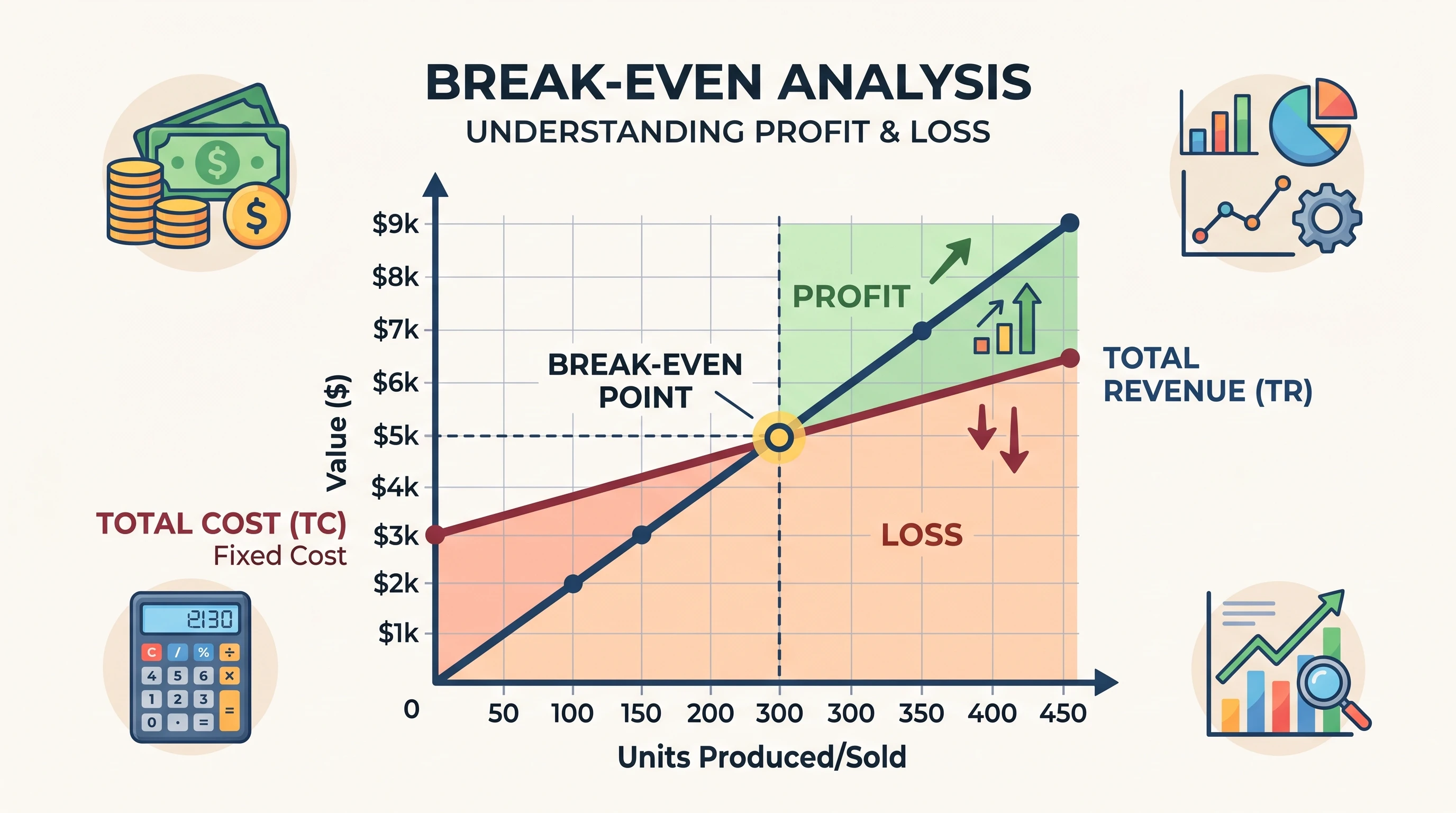
Break even analysis is a method that helps you figure out when your revenue will cover your costs. In super simple terms, it’s about pin pointing the number of units you need to sell (or the amount of income you need to bring in) so you’re not losing money, but you’re not making a profit yet either. This number is called the break even point.
This concept pops up a lot in business planning, pricing decisions, and checking whether a new venture makes sense. I have used Break Even to test the validity of projections for clients. The idea has been around for ages and you’ll spot it in everything from small retail shops to giant corporations. I find it especially helpful because it gives me a reality check before I start tossing lots of cash or effort at something new.
How Break Even Analysis Works
The mechanics of break even analysis rely on understanding your costs and your revenue. Here’s how it comes together:
- Fixed Costs: These are the costs that don’t change, no matter how much you sell. Think of things like rent, salaried staff, and insurance.
- Variable Costs: These go up and down depending on your sales volume. Examples include materials, production supplies, and some wages.
- Selling Price per Unit: This is how much you sell each product or service for.
The break even point (usually measured in units sold) is calculated by dividing your total fixed costs by the difference between your selling price per unit and your variable cost per unit. Here’s the formula:
Break Even Point (in units) = Fixed Costs ÷ (Selling Price per Unit – Variable Cost per Unit)
If math isn’t your thing, that’s totally fine. Spreadsheets and free online calculators can run the numbers for you. The key thing is to be honest with your estimates so you get a realistic answer.
Why Break Even Analysis Is Really Important in Decision Making
I rely on break even analysis when I want to understand if a business idea or product launch is going to be worth it. It isn’t about predicting the future, but it does help shed light on what needs to happen for things to work. Here are a few ways this tool comes in handy:
- Testing if a new business idea is financially possible
- Setting sales targets based on what’s needed to cover costs
- Checking the effects of changing prices, costs, or production volume
- Staying sharp about risks before making big investments
You might also spot break even analysis used by investors or lenders when they’re deciding whether something is worth funding. It’s one of the easiest ways to give both yourself and others a clearer picture of financial realities.
Step by Step Guide to Doing Your Own Break Even Analysis
If you want to try this out yourself, here’s how I like to break it down:
- List Your Fixed Costs: Write down every monthly or yearly expense that stays the same no matter what, like lease payments.
- Add Up Your Variable Costs per Unit: Find all the costs that pop up each time you produce or sell a unit, like raw materials.
- Choose Your Selling Price: Figure out how much you plan to charge per unit.
- Plug the Numbers Into the Formula: Calculate the break even point using the basic formula above. If you want, you can use a spreadsheet or an online calculator to make life easier.
- Double Check Your Assumptions: Use real world data when ever possible, don’t just guess!
- Make Sure You Have Accurate Numbers: Break even analysis depends on having accurate financial information. QuickBooks helps by tracking income and expenses, organizing costs, and providing financial reports that make it easier to evaluate your break even point and make better decisions about pricing and costs. If you want an easier way to keep your financial information organized, take a closer look at QuickBooks and see how it can help.
It’s normal for the numbers to surprise you the first time you do this. If your break even point is really high, you might want to tweak your pricing or cut down on costs to make your plan more realistic.
Things to Think About Before Relying on Break Even Analysis
Break even analysis is pretty handy, but it doesn’t paint the whole picture. Here are a few factors I always keep in mind:
- Changing Costs: Prices for materials, rent, or even labor can change, especially if you’re launching over a few months or years.
- Sales Uncertainty: It’s tough to predict how much you’ll actually sell, especially if the market’s new or pretty competitive.
- Ignoring Time and Cash Flow: Break even only shows the point at which you stop losing money. It doesn’t cover when cash actually hits your account, or seasons when sales slow down.
- Multiple Products or Services: If you sell a bunch of different things, break even analysis can get a bit more complex, but you can still use it for each main item or average things out.
Changing Costs
I’ve noticed that costs never seem to stay the same for long. Shipping rates might spike, minimum wage rules change, or suppliers raise their prices. It helps to experiment with different scenarios in your analysis, like plugging in higher costs to see what would happen if things shift.
Sales Uncertainty
Sales are rarely predictable, especially for new ideas. Consider running a couple of versions of your break even analysis using best case and worst case sales numbers, this gives you guardrails for planning.
Time and Cash Flow
Break even analysis is less about when money moves in real life and more about the overall relationship between costs and revenue. If cash flow timing is tight for your business, combining break even with a monthly cash flow projection can be very useful. Many small businesses use both tools together, so they don’t get surprised when bills are due.
Selling More Than One Thing
If your business handles several products (or services), you can either do break even analysis for each individual product or use a weighted average if you know the sales mix. It takes a bit more number crunching but provides clearer, more realistic insights. For example, in a bakery, if you sell both cupcakes and pastries, figuring out the average profit per item (weighted by what you sell the most) helps you set realistic targets for the shop as a whole.
Easy Ways to Use Break Even Findings
Once you have your break even number in hand, there are a bunch of ways to make use of it:
- Set realistic sales goals for yourself or your team
- Decide if you need to cut back on costs or rethink your selling price
- Share data with potential investors or lenders to build your case
- Adjust your production or marketing strategy based on what’s realistic
In the real world, running this analysis can help you avoid spending loads of money chasing ideas that won’t ever pay for themselves. It can also highlight situations where a little tweak, like raising prices by $1, makes a big difference. If, for example, you run an online shop and your break even point is just out of reach, a small change in your pricing structure or lowering packaging costs can make your whole operation profitable faster.
Real World Examples
I’ve seen firsthand how break even analysis helps small businesses and solo entrepreneurs get a grip on their numbers. Here are a few practical scenarios:
- Bakeries and Cafés: Deciding how many cakes or coffees they need to sell per day to pay the rent and stay afloat.
- Freelancers: Figuring out how many billable hours or projects they need each month to match their fixed living and business expenses.
- Ecommerce Shops: Looking at the number of orders required to cover subscription fees and advertising spend.
Even larger companies use this tool. Many run break even analysis for each product line before big launches. It’s simple but effective regardless of your business size.
Frequently Asked Questions
People tend to ask similar things once they start working with break even analysis, so I’ve put together a few of the most common questions:
Question: Can I do break even analysis if I sell services instead of products?
Answer: Absolutely. You just use your service related variable costs and set your fixed costs as usual. For example, if you’re a web designer, your variable costs might include hosting fees or contractor costs per project.
Question: How often should I run break even analysis?
Answer: It’s a good idea to update your analysis whenever your costs or selling prices change a lot, or before launching new products or services. Regular check ins help keep your targets realistic.
Question: Is break even analysis useful for non profits?
Answer: Yes! Non profits can use break even analysis for event planning or launching mission driven projects. It helps make sure fundraising targets actually cover all costs.
Bottom Line: Using Break Even Analysis in Your Financial Planning
Break even analysis might seem basic, but it’s a really effective way to check the financial health of your ideas before jumping in. Whenever I’m faced with big decisions, like whether to launch a new product or invest more into my business, this tool gives me a clearer sense of what needs to happen to succeed. Paired with honest data and some well placed caution, it’s a straight forward way to increase your odds of financial success.
Give it a try with your next project or idea. Seeing the numbers in black and white definitely makes it easier to move ahead with confidence. Over time, you’ll start to spot patterns and know which levers to pull to make your plans successful, whether you’re handling a side hustle or a growing company.
Here’s a little transparency: Our website contains affiliate links. This means if you click and make a purchase, we may receive a small commission. Don’t worry, there’s no extra cost to you. It’s a simple way you can support our mission to bring you quality “Business Planning content.”
This is such good information for business owners. I run into so many who have NEVER calculated their per-plate cost, for example. They have no idea if they are losing money with every meal they serve! I’ve never had such a nice, clear outline to go over with them, though – so this is a great tool. One question that is difficult for me to answer sometimes is on variable costs. For example, say a business wants to expand their production from 500 to 5000 units, but they aren’t clear at all on how many more employees it’s going to take to get there (so they often fudge the number way below reality). I get stumped on how to deal with that when talking to people. Any ideas?
Thanks for the comment.
Look at production in units at the current level of volume. Reduce that to units produced per employee. It becomes a math calculation after that. That will give you an answer for discussion purposes. There are other variables such equipment or size of the production area and how that effects productivity. Those things would need to be taken into account as they might affect the units produced by employee. If I wasn’t clear and you have additional questions please feel free to contact me.
Hello! Your explanation makes break-even analysis approachable while still acknowledging its limits, especially the gap between accounting break-even and actual cash-flow timing (huge detail). Using contribution margin language can help readers see the practical lever: each sale contributes the selling price minus its variable cost toward covering fixed costs.
For a service business with several offer tiers, would you recommend calculating break-even separately by service first, then creating a weighted average only after there is enough sales history to trust the mix? And could a follow-up example show how sales tax, card-processing fees, refunds, and owner pay should be classified, since those are the real-world details most likely to distort a beginner’s calculation?
Thanks for the comment.
Calculating a cash flow break even isn’t that difficult. Just use the cash equivalents instead of income statement amounts in the calculation.
I don’t understand what you mean by “several tiers”. You should calculate the break-even for the entire operation then break it into components after. It is important to have a sales history to go by. Sales tax, refunds and card processing fees are variable expenses as they vary by volume. Owner pay should be classified as a fixed expense. Based on my experience owners usually take a salary. Any additional compensation is taken as a distribution. If you have any questions please contact me. gtelac@man.com is my primary email address.